
Oxford Translation Day 2026
Translating YA and Middle Grade Literature: A Primer
09:30-11:00
Seminar Room 8, St Anne's College
Register via Eventbrite, here.
Is translating YA and middle grade literature really that different from translating literature for adults? How does one craft a compelling and unique voice when translating for children? What are the pitfalls when translating dialogue for this age group? What other challenges does the translator face when navigating between two languages and cultures for younger readers? How does one pitch such books? With the announcement of the new Children's Booker highlighting the importance of young audiences, now is the time to try your hand at translating Arabic YA into English (no knowledge of Arabic necessary), with award-winning translator, Sawad Hussain, as your guide.

Sawad Hussain is a PEN Award-winning translator from the Arabic. She has been shortlisted for The Warwick Prize for Women in Translation, the Saif Ghobash Banipal Prize and the National Book Award for Translation, and longlisted for the Moore Prize in Human Rights Writing, among others. A former co-chair of the Translators' Association in the UK, Sawad has also served as a judge for the Palestine Book Awards and the 2023 National Translation Award. She has run translation workshops under the auspices of Shadow Heroes, Africa Writes, Shubbak Festival, the Yiddish Book Center, the British Library and the National Centre for Writing. In 2024, she became the first translator-in-residence for "Wasafiri", and was the Spring 2025 translator-in-residence at PIIRS, Princeton University.
Translalia: Translation in Dialogue with AI
09:30-11:00
Seminar Room 9, St Anne's College
Register via Eventbrite, here.
Large Language Models (LLMs) are biased, error-prone, and bad for the environment; they reinforce the dominance of English and generate large amounts of terrible writing; and they are associated with a simplistic, functional conception of translation. But they can also represent language variety in unprecedentedly fluid ways, and enable new kinds of translational creativity. We are developing an app, Translalia, to support this sort of translational interaction with LLMs. Join us to try it out, share your views, and more generally explore how AI might change translation for the better as well as the worse.
Please bring a laptop and a short text you'd like to work with.

Professor Matthew Reynolds is interested in how literature germinates between and crosses languages, and in translation as a creative process, especially as it involves Italian, French, Latin and Greek and the many languages of English. He founded the Oxford Comparative Criticism and Translation Research Centre (OCCT) and the associated Masters in Comparative Literature and Critical Translation. Some of his books are: the open access Prismatic Jane Eyre: Close-Reading a World Novel Across Languages (2023) which includes interactive digital elements; Prismatic Translation (2019), Translation: A Very Short Introduction (2016), The Poetry of Translation: From Chaucer & Petrarch to Homer & Logue (2011), Likenesses (2013) The Realms of Verse (2001), and the novels Designs for a Happy Home (2009) and The World Was All Before Them (2013). He is currently leading a collaborative research investigation into 'AI, Decoloniality and Creative Poetry Translation' and developing an app, Translalia, to support creative, ethically reflective translation through language(s) in dialogue with AI tools.

Dr Joseph Hankinson studied English at Balliol College, completing his DPhil in 2020 under the supervision of Professor Matthew Reynolds. His research connects the writing of the long nineteenth century to its global contexts, both in terms of the influence of specifically tropical regions and people on nineteenth-century literature, and in terms of that literature's global afterlives. His first book, Relational Worlds: Kojo Laing, Robert Browning, and Affiliative Literature (2023), exemplified these interests by tracing vital affiliations between nineteenth-century British poetry and its (broadly-conceived) tropical reception. It has been reviewed in Victorian Poetry and in The Cambridge Journal of Postcolonial Literary Inquiry. He has published widely on relations between tropical and non-tropical imaginative worlds, as well as on the cross-temporal imagination of nineteenth- and twentieth-century writing, with articles appearing and forthcoming in Victorian Literature and Culture, Style, Essays in Criticism, Mosaic, Journal of Cultural Research, and elsewhere. He is a postdoc on the 'AI, Decoloniality and Creative Poetry Translation' project.
Coffee Break: 11:00-11:30
Hélène Cixous's Angst and Claude Cahun's Cancelled Confessions: A Workshop on Translating Two 'Difficult' Stylists Over Time
11:00-13:00
Seminar Room 7, St Anne's College
Register via Eventbrite, here.

Sophie Lewis's new translation of Cixous's pivotal fiction Angst came out this year, forty years after the book's first translation was published. Susan De Muth published her new translation of Cahun's Aveux non avenus in 2024 as Cancelled Confessions, also following others' attempts at translating this twisty, unboxable text. In this workshop, De Muth and Lewis will offer a brief tour of their thinking and approaches to their texts, and will then invite participants to engage directly with the texts. The workshop will include comparisons with previous existing translations and discussion of their influence.

No prior reading is necessary but some would be helpful. A fair knowledge of French is important.
Sophie Lewis is a prize-winning translator from French and Portuguese. Her new translation of Angst by Hélène Cixous was published by Silver Press in March 2026.
Susan de Muth is the translator of Claude Cahun’s Cancelled Confessions and Uranian Games and several other Surrealist and Dada texts.
Feminist Translation
11:30-13:00
Seminar Room 9, St Anne's College
Register via Eventbrite, here.
In this workshop we will think about what “feminist translation” is, and why it matters. We will start by considering how (and why) we might take a feminist approach both in the choices we make about which books to translate and in the choices we make while translating. Then we’ll put this into practice by working together on a translation of a poem from French, exploring creative responses and developing our feminist translation practice. A literal translation of the poem will be provided so that non-French speakers can also participate in the creative exercise.

Professor Helen Vassallo is a British Maltese translator and Associate Professor of French and Translation at the University of Exeter (UK). Her recent and forthcoming translations include work by Leïla Slimani, Darina Al Joundi, Margarita García Robayo and Renée Vivien. She is the author of Towards a Feminist Translator Studies: Intersectional Activism in Translation and Publishing, co-author of Getting Started as a Literary Translator: Translated Literature and Publishing, and Translations Editor of the journal Feminist Translation Studies.
Translating Dialect
11:30-13:00
Seminar Room 8, St Anne's College
Register via Eventbrite, here.
How to translate dialect? This task is often deemed to be impossible. Dialect can be used to great effect in literature, yet it challenges everyone: writers, readers and translators. The challenges are not only linguistic (how do you translate likesay in Irvine Welsh’s Trainspotting?), but also inevitably raise political, social and cultural issues. And yet, many inventive and acclaimed literary translations show that translating dialect is not only possible, but can open up unique creative possibilities and reveal affinities even between the most distant language pairs. This workshop will explore dialect through text and sound, hands-on exercises and examples from a wide range of languages.

Dr Kotryna Garanasvili is a writer, translator, and interpreter working with English, Lithuanian, French, German, Russian, and Georgian. She is an Assistant Professor of literature and translation, teaching and researching at Vilnius University and University of East Anglia, where she has received a PhD in literary translation and serves as a member of the BCLT Research Group. She is a mentor as well as a previous mentee of the Emerging Translator Mentorship at the National Centre for Writing and has been awarded traineeships at the EU Council and the European Parliament. More about Kotryna on her webpage.
Lunch: 13:00-14:00
Lost Lingual: Dinara Rasuleva in Conversation with Hendrikje Dorussen
14:00-15:00
Seminar Room 7, St Anne's College
Register via Eventbrite, here.
Translator Dinara Rasuleva joins Hendrikje Dorussen to discuss Lost Lingual, reflecting on language, translation, identity, and cultural memory. The conversation will explore how voices and histories travel across languages, and how translation can open up new ways of thinking about belonging, expression, and linguistic experience.

Dinara Rasuleva is a writer and poet_ess based in Berlin and born in Kazan, Tatarstan. Master’s in Linguistics, Nizhni Novgorod State Linguistic University, 2009. Dinara writes in Tatar, Russian, English and German — languages she uses everyday. Dinara’s poetry was described and analysed as decolonial and feminist writing, as expressionist poetry and performance poetry. In 2020 Dinara started a feminist writing laboratory for russian-speaking immigrant FLINTA community. In 2020, she co-founded the musical art collective TATAR KYZ:LAR, whose debut multilingual album AŞ was released in 2025 in the form of a computer game. In 2022 Dinara started the Lostlingual project, an investigation of the loss of her native Tatar language through translingual abstract poetry. In 2023 in collaboration with Berlin library Totschka Dinara started TEL:L laboratories: writing in native forgotten or stolen languages. Published books: Su : voda (s tatarskogo)/Су : вода (с татарского), book of poetry, 2022, Babel bookstore publishing house; Traumagotchi/Травмагочи, a novel, 2025, shell(f); and, Lostlingual, essay and multilingual poems, 2025, Rab-Rab Press.

Hendrikje Dorussen is a DPhil student in the Faculty of English at the University of Oxford, St Anne’s college, and previously undertook her BA and MPhil at the University of Cambridge. Her research focusses on the representation of language endangerment in contemporary literature and cultural production and is funded by the Rupert Murdoch studentship. Her research interests include translation, indigeneity, visual culture, and decolonial linguistics. Alongside her research, she is also an editorial board member of the OCCT Review.
Coffee Break: 15:00-15:15
Theatre in Translation: From Page to Stage with Foreign Affairs
15:15-16:15
Tsuzuki Lecture Theatre, St Anne's College
Register via Eventbrite, here.
What happens to a play when it moves between cultures and languages – and what does it mean for that translation to come to life in performance? Led by Foreign Affairs co-artistic directors Camila França and Trine Garrett, joined by two associate actors, this hands-on session offers a window into the creative decisions that shape how a play finds its voice in a new context. With over fifteen years of experience sharing world theatre, nine UK/world premieres, and contributions to over 30 new English translations, Foreign Affairs brings rare insight into the art of translating for the stage. Expect a short presentation on Foreign Affairs' approach to theatre translation, micro translation exercises, and a live reading by professional actors of work developed in the room – with time for open discussion throughout. No experience of a specific language needed – the exercises are designed to be accessible whatever your linguistic background, making this a session for anyone curious about the space where translation meets performance. Bridging the literary and the theatrical, this is an invitation to experience the journey from page to stage first-hand.
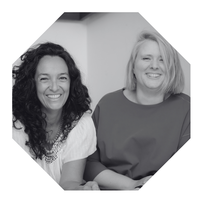
Winner of The Stage International Award 2026, Foreign Affairs is a theatre company with an adventurous spirit, led by Camila França and Trine Garrett. Based at the Rose Lipman Building in Hackney, they stage international plays in translation – work that resonates across languages, cultures, and communities. They can often be found in unexpected spaces – creating close-up encounters between global stories and local audiences. Recent productions include Black Swans by Christina Kettering, translated by Pauline Wick; The Wetsuitman by Freek Mariën, translated by David McKay; and Where I Call Home by Marc-Antoine Cyr, translated by Charis Ainslie. Foreign Affairs also run workshops and training programmes for emerging theatre-makers and translators, and local young people, including the Theatre Translator Mentorship (unique in the industry), Emerging Theatre-Makers activities, and workshops in secondary schools in collaboration with Performing International Plays — all grounded in the company's practice.
Coffee Break: 16:15-16:30
"This is Why": Translators on Translating
16:30-17:45
Seminar Room 7, St Anne's College
Register via Eventbrite, here.
Join acclaimed literary translators who have featured on prestigious shortlists and longlists to hear more about their translation practices and choices. They will discuss a short poem or passage that they have recently translated, and give the audience insight into the “hows” and “whys” of their approach.
Drinks Reception: 17:45-18:15
Oxford-Weidenfeld Translation Prize Short List Readings and Prize-Giving
18:15-19:15
Tsuzuki Lecture Theatre, St Anne's College
Register via Eventbrite, here.
The Oxford–Weidenfeld Prize is for book-length literary translations into English from any living European language. It aims to honour the craft of translation, and to recognise its cultural importance. It was founded by Lord Weidenfeld and is supported by New College, The Queen’s College, and St Anne’s College, Oxford. This celebration of literary translation will feature readings from the work of the shortlisted translators, and the presentation of the prize.

